
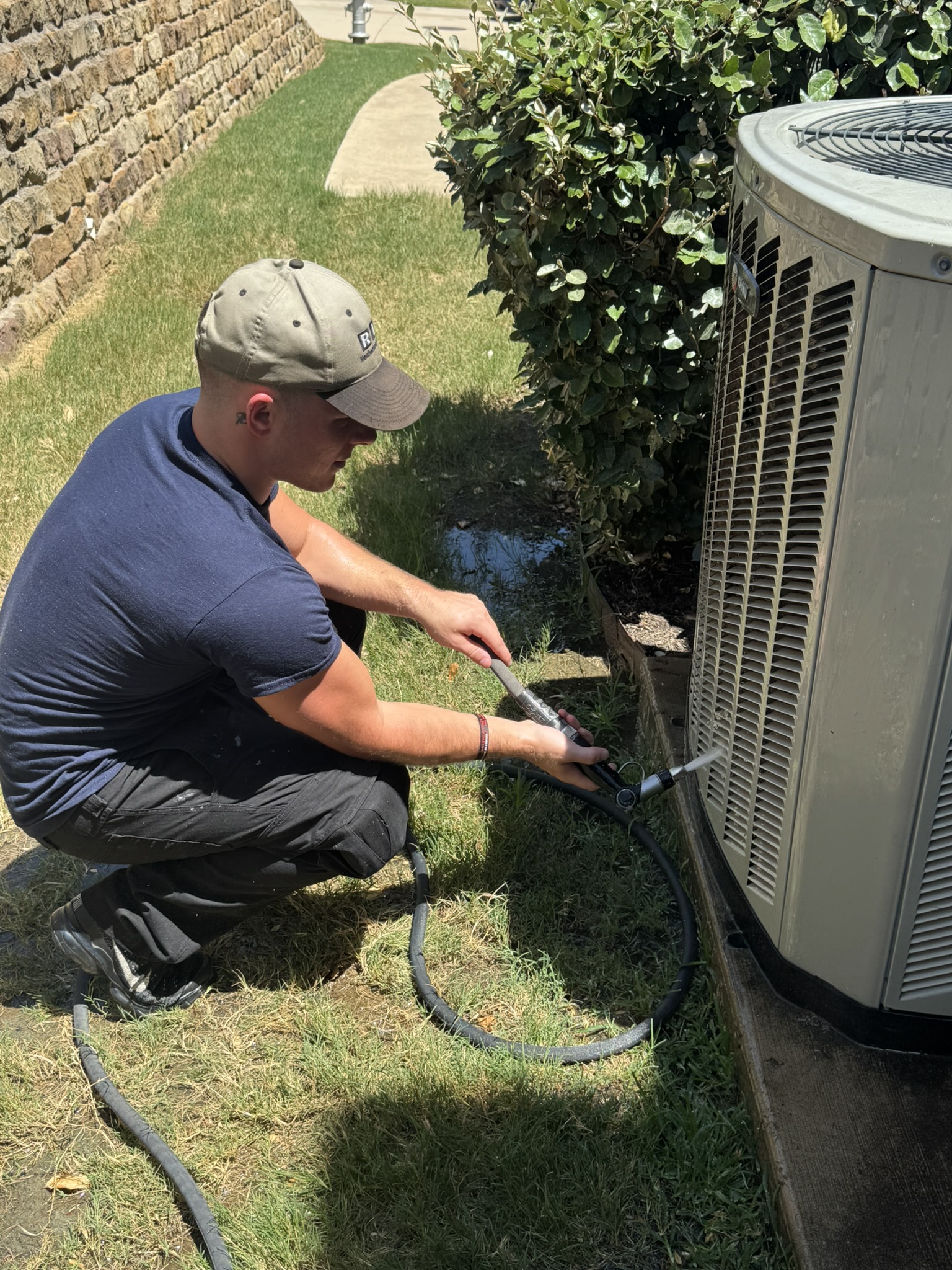
Expert insights from Scott Titensor, President, Christmas Air Conditioning and Plumbing (see disclosure below)
Editor's note
You're reading this because an HVAC company just offered you a maintenance plan, and you want to know if it's actually worth the money. Or maybe your system is getting older and you're wondering whether to keep paying for tune-ups or start saving for a replacement. Either way, you want a straight answer from someone who isn't trying to sell you one.
Here's the short answer: for most DFW homeowners with systems between 3 and 12 years old, a maintenance plan in the $150-$300/year range pays for itself. The math changes if your system is brand new (you're mostly just protecting your warranty) or over 12 years old (you're better off putting that money toward a replacement fund).
The DFW climate makes maintenance matter more here than in most of the country. But the industry's biggest marketing claims don't hold up to scrutiny. We dug into primary sources so you don't have to.
What a maintenance tune-up should actually include
ENERGY STAR publishes a maintenance checklist that quality HVAC contractors should follow. It covers both heating and cooling systems. For both, technicians should check thermostat settings, tighten electrical connections, measure voltage and current on motors, lubricate moving parts, inspect the condensate drain, and run the system through a full start-operate-shutdown cycle.
On the cooling side, the big items are cleaning evaporator and condenser coils, checking refrigerant levels, and measuring blower airflow. ENERGY STAR notes that airflow problems alone can reduce system efficiency by up to 15% (source: ENERGY STAR Maintenance Checklist, energystar.gov). On the heating side, the critical safety check is inspecting the heat exchanger for cracks, which can leak carbon monoxide.
Scott Titensor, President of Christmas Air Conditioning and Plumbing, puts it simply: "Homeowners could do just about all of it. It's just the know-how of what to look for, and do they want to do that?" The one thing homeowners cannot legally do themselves is handle refrigerant, which requires EPA Section 608 certification. The rest comes down to trained eyes, proper instruments, and knowing what the readings mean.
The one task ENERGY STAR says homeowners should handle: inspecting and changing air filters monthly. In DFW's high-pollen environment, check every 30 days and replace every 30-60 days during spring and fall.
If a company's tune-up doesn't include electrical connection testing, coil cleaning, refrigerant check, and condensate drain clearing, it falls below the ENERGY STAR standard. Ask for the checklist before you sign up.
What DFW homeowners should expect to pay
Nationally, individual tune-ups run $75-$250 per visit. Annual plans covering two visits (spring AC check plus fall heating check) typically cost $150-$300 for basic tiers, $300-$500 for standard tiers with repair discounts, and $500-$800+ for premium plans with parts coverage.
DFW pricing runs slightly above the national floor. Here's what local companies charge:
| Company | Plan cost | Key inclusions |
|---|---|---|
| Aire Serv | Quote-based | 15% off all repairs, priority scheduling, maintenance records |
| Aire Texas | $79 single tune-up | Comprehensive 15+ point check |
| Airtron (Basic) | $240/yr ($19.95/mo per system) | 1 annual tune-up, parts/labor protection, priority service |
| Airtron (Standard) | $323/yr ($26.95/mo per unit) | 2 annual tune-ups, full parts/labor protection, free filters |
| Berkeys (MVP) | $237/yr ($19.75/mo) | Tune-ups + priority scheduling + repair discounts |
| Christmas Air (Christmas List) | $150/yr first unit, $99/yr additional | 2 seasonal tune-ups, annual plumbing inspection, 15% off repairs, flat $49 dispatch fee |
Christmas Air Conditioning and Plumbing and Homework share a common ownership interest.
Two separate tune-ups at market rate cost $300-$550/year in DFW. A basic plan delivering the same visits costs $150-$300. That's $100-$300 in savings on visits alone, before repair discounts or waived fees.
Does maintenance actually extend system life? The honest evidence
Government data supports the value of maintenance. The U.S. Department of Energy reports efficiency differences of 10-25% between well-maintained and neglected heat pumps (source: DOE, "Operating and Maintaining Your Heat Pump," energy.gov). ENERGY STAR cites 5-15% energy savings from proper maintenance.
The most dramatic industry statistics don't hold up as well. Claims like "maintenance reduces breakdowns by 95%" appear across HVAC company websites, but they cannot be traced to peer-reviewed research. A DOE systematic review found that installation quality (proper airflow, correct refrigerant charge, duct performance) may matter as much or more than ongoing maintenance. Many "maintenance" problems are actually installation problems that a tune-up won't fix.
We asked Scott Titensor what percentage of emergency summer calls could have been prevented by a spring tune-up.
"Maybe 30-35%. Weak capacitors, weak contactors, motors. Things you can show the homeowner are weak and going to go out soon. A lot of people without maintenance don't know that."
That's an honest number from someone who runs these calls. It means maintenance catches roughly a third of summer failures before they happen. It also means two-thirds of breakdowns would have happened regardless. A contractor who tells you maintenance prevents everything is overselling it.
What maintenance plans don't cover (and it's a lot)
Most basic plans cover only the tune-up visits. Not the repairs discovered during those visits. This is the single most important thing homeowners miss.
- •Refrigerant — Almost universally excluded. Expect $100-$500 for a recharge on top of plan costs.
- •Major components — Compressors ($2,000-$4,000), heat exchangers, and coils are excluded from all but premium-tier plans.
- •Emergency service — Most plans offer "priority scheduling," not free emergency visits. Some limit service to business hours with surcharges outside.
- •Ductwork — Inspection and cleaning are separate services, usually offered as upsells.
- •Older systems — Many contracts require equipment to pass an initial inspection. All deficiencies must be corrected at your expense before coverage starts.
Read the fine print. If a plan seems too cheap, check what's excluded.
The upselling problem: when tune-ups become sales calls
The cracked heat exchanger scare is the most documented upselling tactic in the HVAC industry. A tech claims the heat exchanger is cracked, "red-tags" the furnace as dangerous, and pushes for an immediate replacement costing $3,000-$10,000+. The Air-Conditioning, Heating, and Refrigeration Institute (AHRI) states that any crack affecting combustion will be visible to the naked eye without cameras or special detection agents.
We asked Titensor about unnecessary repairs recommended during maintenance visits. His answer was direct:
"That's more of an integrity and honesty question than anything. We're going to recommend items. The question is whether you need them. So it's about the pressure and the scare tactics behind pushing something that isn't necessarily needed."
The takeaway for homeowners: the red flag isn't the recommendation itself. It's how it's delivered. If anyone is making you feel pressured or uncomfortable, that is the biggest warning sign. Always get two to three independent opinions before approving any major repair found during a maintenance visit.
Why DFW is one of the hardest climates on HVAC equipment
According to NWS data, DFW averages about 18-20 days per year at or above 100 degrees (source: NWS Fort Worth/Dallas). The average first 100-degree day is June 30th, and the average last is August 27th. During the worst years (2011 had 71 triple-digit days, 2023 had 55), systems run at maximum capacity for weeks without relief.
DFW's pollen load is significant but often overstated in HVAC marketing. Dallas did not rank in the AAFA's top 20 Allergy Capitals for 2026 (source: AAFA 2026 Allergy Capitals Report). That said, DFW does experience multiple overlapping pollen seasons: tree pollen from February through April, grass pollen from March through October, ragweed in fall, and mountain cedar from December through February. Filters clog faster when the system runs continuously during these overlapping seasons.
Scott Titensor's advice for DFW homeowners: "The biggest thing with DFW is ensuring filters are changed out frequently because your unit's probably going to be running almost 24/7 in summertime. Also, in the springtime, make sure your outdoor condenser is super clean and sprayed off from pollen or dirt, because that's going to help with efficiency in the summer."
AC vs. furnace: do they age the same way?
They don't. Furnaces tend to last longer than AC equipment in DFW. Most furnaces carry a 20-year heat exchanger warranty, and the heating side simply doesn't accumulate the same runtime as the cooling side in a Texas summer. Heat pumps are different because they handle both heating and cooling year-round.
When the AC side needs replacing, homeowners often ask whether they can keep the existing furnace. Titensor's answer: "There are times where we can replace just the AC side and leave the existing furnace. However, you do lose some efficiencies if you're not upgrading your furnace along with the new equipment. It's like buying a new garage door and replacing the door, rollers, and tracks, but you left the motor."
Translation: you can do it, and it saves money upfront. But you won't get peak performance from the new AC if the furnace blower is older and less efficient.
The break-even math: three homeowner scenarios
| Scenario | Plan value | Primary benefit | Recommendation |
|---|---|---|---|
| System 1-3 years old | Marginal | Warranty protection | Basic plan to preserve warranty |
| System 3-12 years old | Strong | Efficiency + breakdown prevention | Plan at $150-$300/yr clearly pays off |
| System 13+ years old | Weak | Minimal | Skip the plan. Get one tune-up. Save for replacement. |
New systems (1-3 years): New equipment rarely needs repairs, so discount savings are minimal. But most manufacturers require documented annual professional maintenance to keep warranties valid. Trane, for example, requires registration within 60 days for the full warranty. Check your specific manufacturer's warranty terms. While the Magnuson-Moss Warranty Act prohibits manufacturers from requiring a specific company for maintenance, they can require proof that maintenance was performed by a qualified professional.
Mid-life systems (3-12 years): This is the sweet spot. Two tune-ups save $200-$350 versus buying individually. DOE data shows 10-25% efficiency improvement from proper maintenance on heat pumps. One waived diagnostic fee ($75-$200) can pay for a significant portion of the annual plan cost.
Aging systems (13+ years in DFW): Titensor recommends starting the replacement conversation around the 7-8 year mark, with the understanding that DFW's heat accelerates wear. His framework: if a repair costs a significant percentage of replacement cost at that age, it's not worth fixing. A single pre-season tune-up at $150-$275 makes more sense than an annual plan for end-of-life equipment. Put the rest toward your $5,000-$15,000 replacement fund.
Red flags in maintenance contracts
- •Auto-renewal with murky cancellation terms — Some contracts require you to pay the remaining annual balance if you cancel after receiving service.
- •Mandatory binding arbitration — Some providers require arbitration and waive your right to class action. This clause can survive even after the contract ends.
- •Price escalation without caps — Companies can raise rates at renewal without clear limits.
- •Low liability caps — Some plans cap total liability at three times what you've paid in the past year. On a $15/month plan, that's roughly $540, far below the cost of any serious repair.
- •Transfer restrictions — Most plans don't transfer if you sell your home.
- •Ultra-cheap entry pricing — A $29 tune-up is designed to get a technician into your house and create a repair list. That's not a maintenance plan. That's a sales call.
Frequently asked questions
How often should I service my AC in Texas?
Twice a year. Once in spring before cooling season and once in fall before heating season. ENERGY STAR recommends this schedule nationally. Change filters every 30-60 days during peak seasons in DFW.
Can I just do maintenance myself instead of buying a plan?
You can handle filter changes and basic outdoor condenser cleaning yourself. But checking refrigerant requires EPA Section 608 certification. Professional visits also catch weak capacitors, contactors, and motors before they fail. Titensor estimates about 30-35% of emergency summer calls could have been prevented by a spring tune-up.
Will skipping maintenance void my warranty?
It depends on the manufacturer. Trane requires proof of annual professional maintenance to honor warranty claims. Other manufacturers may have different requirements. Check your specific warranty documentation. No manufacturer can require you to use a specific company for maintenance (that's protected under the Magnuson-Moss Warranty Act), but they can require documentation that a qualified professional performed the work.
What's the most important thing to ask before signing a maintenance plan?
Ask exactly what's excluded. Most plans cover the tune-up visits but not repairs found during those visits. Ask whether refrigerant is included, whether there are per-visit diagnostic fees, and what the cancellation terms look like. If the company can't give you clear answers, that's a red flag.
Should I replace my AC and furnace at the same time?
Not always. Furnaces last longer than AC equipment. You can replace just the AC side and save money upfront, but you'll lose some efficiency because the older furnace blower won't match the new AC's performance. If your furnace is under 10 years old and in good shape, replacing just the AC is reasonable.
How do I know if a repair recommendation during a tune-up is legitimate?
The red flag isn't the recommendation. It's the pressure behind it. If a technician is making you feel rushed, scared, or uncomfortable, that tells you more than the repair itself. Always get two to three independent opinions before approving major work discovered during a maintenance visit.
The bottom line
HVAC maintenance is supported by real government data from the DOE and ENERGY STAR. The DFW climate makes it more valuable here than in milder markets. The three highest-value tasks are monthly filter checks (the single best DIY task), ensuring proper refrigerant charge (requires a pro), and verifying correct airflow (requires instruments).
Whether you buy a plan or pay per visit, the math favors maintenance for systems between 3 and 12 years old in DFW. For newer systems, a basic plan protects your warranty. For systems past 12-13 years, skip the plan and invest in a replacement fund.
Sources cited
- •ENERGY STAR Maintenance Checklist (energystar.gov)
- •U.S. Department of Energy, "Operating and Maintaining Your Heat Pump" (energy.gov)
- •National Weather Service Fort Worth/Dallas, 100-Degree Day Data (weather.gov/fwd)
- •AAFA 2026 Allergy Capitals Report (aafa.org)
- •EPA Section 608 Refrigerant Regulations
- •Magnuson-Moss Warranty Act, 15 U.S.C. §2301-2312
- •AHRI heat exchanger inspection standards
- •Scott Titensor, President, Christmas Air Conditioning and Plumbing. Recorded interview, March 2026. Christmas Air and Homework share a common ownership interest.